Sacred languages discussed on sacred TiLeqw-iLhch during Gathering of the Eagles
Published 1:30 am Tuesday, June 2, 2026
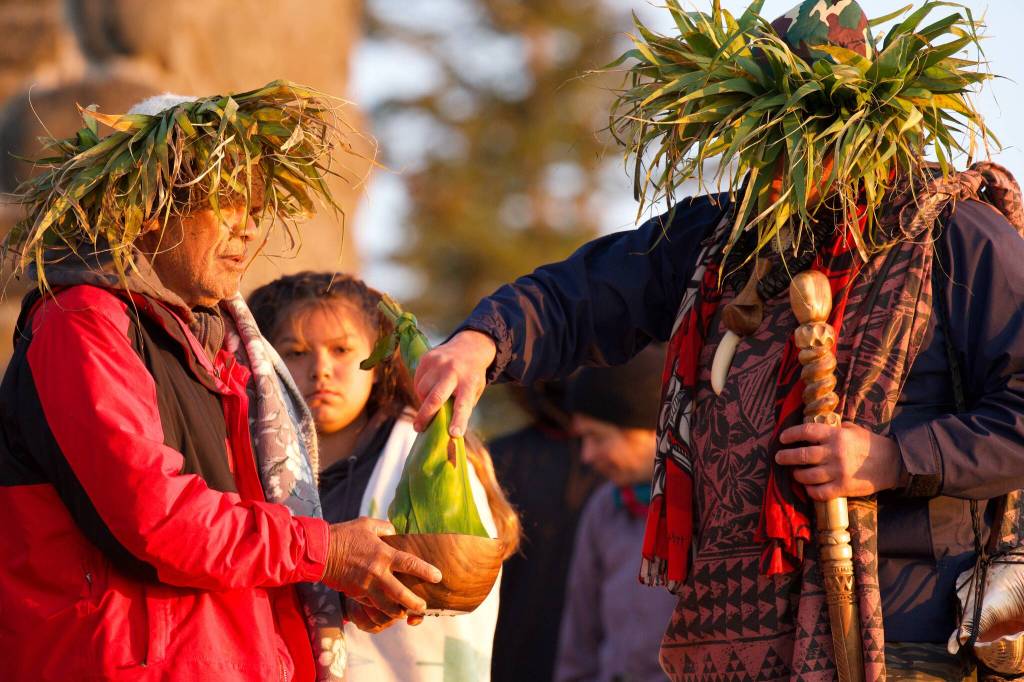
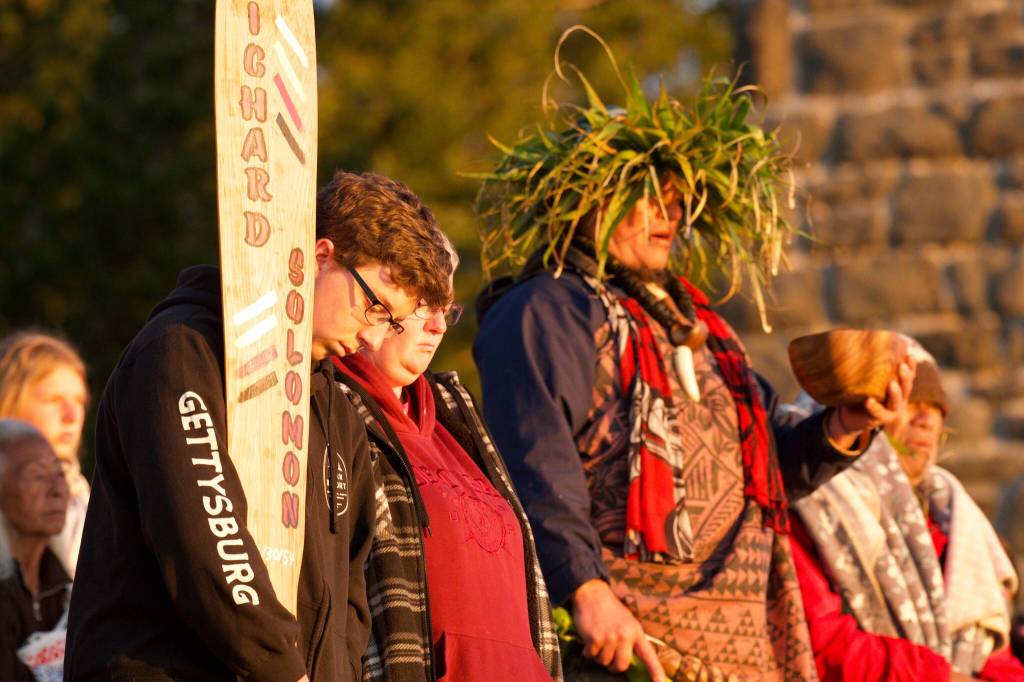
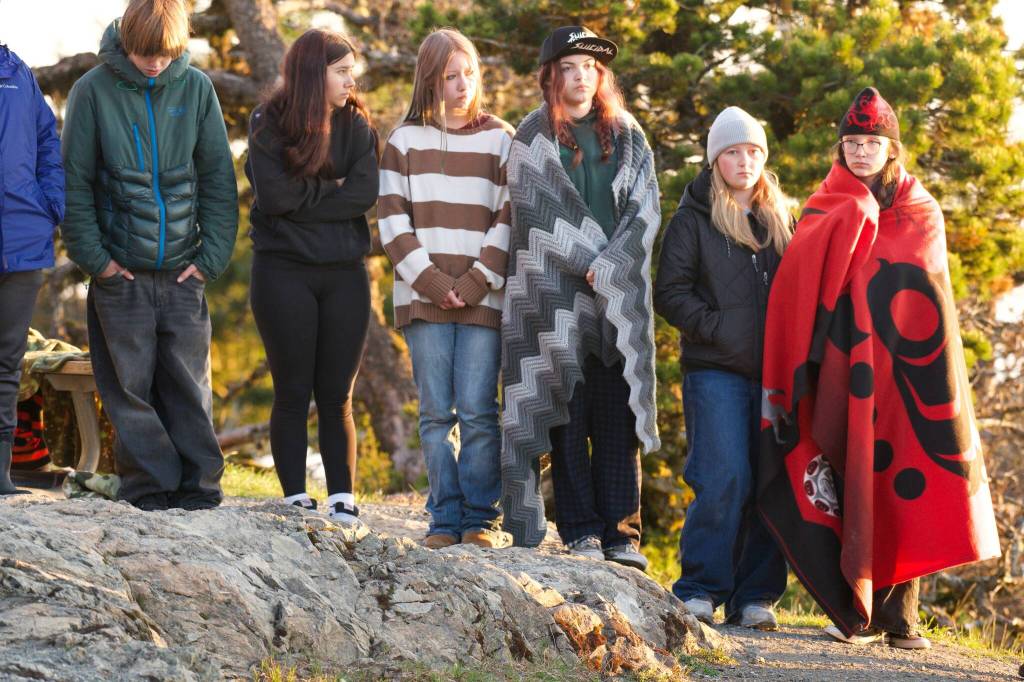

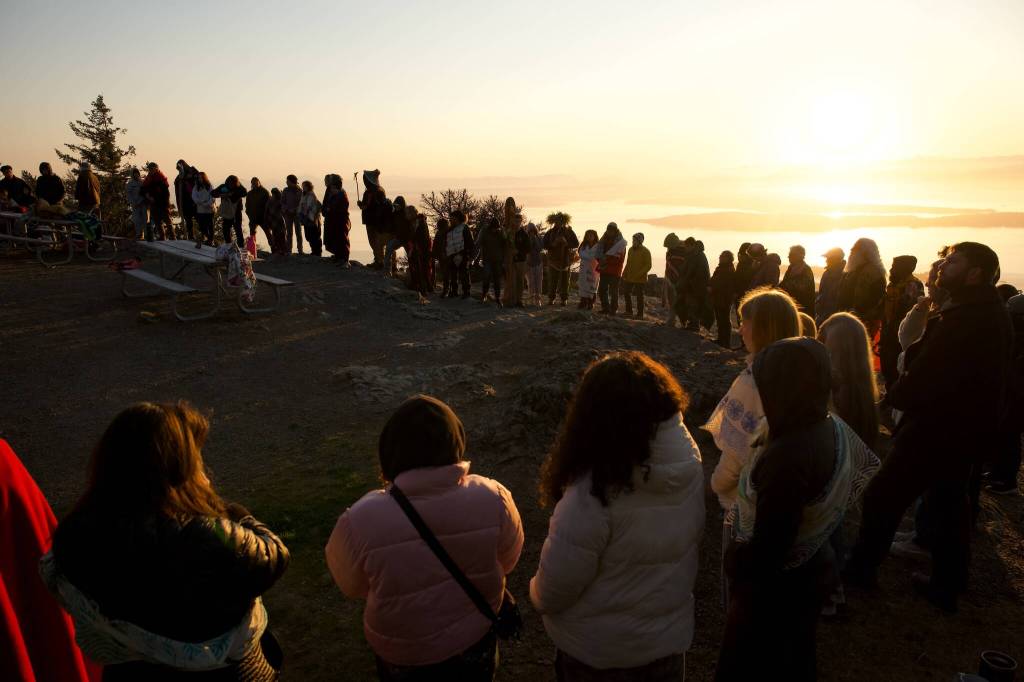
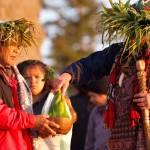
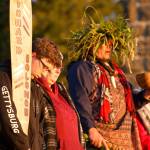
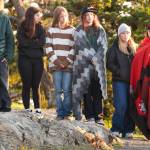
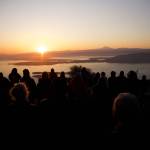

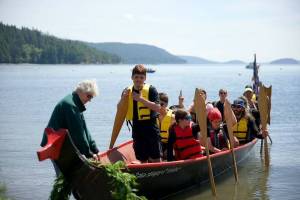
At TiLeqw-iLhch (Haida Point) on Orcas Island, on May 21, during the sixth annual Gathering of the Eagles, a large group of indigenous leaders, educators and community members gathered on sacred land recently returned to the Lummi Nation for a conversation about language — its loss, its power and what it will take to bring it back. Speakers represented indigenous nations and communities spanning the United States, Canada, Hawaii and South Africa, bringing together voices from the Lummi, Muscogee, Puyallup, Quinault, Tlingit and Khoisan peoples, among others.
Language as the core of cultural identity
Brandon Morris of the Lummi Nation, a faculty member at Northwest Indian College, opened with a declaration about what language carries. “One word is like a zip file of so much history,” he said. He described how the word for the Lummi people is rooted in L-shaped longhouses at Lopez Island, meaning “the people that face each other” — a structure that tells you not only where people lived but how they resolved conflict and faced one another in all things. Morris continued and recounted a conversation of an anthropologist studying the Lummi who told a colleague, “Did you know it would take more than 10,000 years for that complexity to evolve in your language?”
Marcus Briggs-Cloud, Ph.D., a Muscogee language teacher, eco-village founder and son of the Wind Clan of the Muscogee Nation, explained that in Muskogee the distinction between alienable and inalienable nouns encodes an entire cosmological worldview. The word for earth — Ekvnwv— is alienable, meaning the culture holds a mediated, non-possessive relationship with the land. “Amigana does not bear the same connotative weight of possession,” he explained. “Therefore, we cannot articulate an ideology of private property in Muskogee or an extractive economic discourse.” The significance runs deep: Because earth is alienable in Muskogee, speakers hold an automatic protocol of respect toward it — they cannot be invasive toward it. He added that this ecological ethic is not merely philosophical — it governs daily life in his community. “If we don’t live into that ecological ethic, we can’t call ourselves Muscogee.”
Litha Booi, founder of Ancient Wisdom Africa, whose ancestral lineage includes Bantu speakers and the Khoisan — the First Nations of Southern Africa — and whose ancestors were enslaved and taken to the Americas, framed language as “a spiritual technology — a deep spiritual technology.” He explained that colonizers understood its centrality: “In order to destroy the people, cut that off. Because who are we without our culture? Who are we without our language?” He added, “There are certain words that your ancestors can only understand in your language. When I say it, there is energy behind it.”
Colonization systematically destroyed language
David Sway-La Duenas, director of culture at Chief Leschi School, described how his grandfather had compiled a Lushootseed dictionary on a typewriter — a document that later gave Duenas his name, Sway-La. He built his own fluency as an adult learner, freestyling bilingual raps in Lushootseed and teaching from prenatal through adult learners. “What if you did one extra thing a week that was language or culture-driven?” he asked.
Briggs-Cloud placed the crisis in stark global terms: Up to 90% of the world’s languages are expected to go extinct by century’s end. Of 162 languages still spoken in the colonial United States, only 20 are expected to survive to 2050. “Nobody ever learned to speak a language sitting in a classroom,” he said.
Jay Julius, former chairman and councilman at Lummi Nation, spoke to what colonization had taken and what had survived. “They didn’t exterminate it for everyone,” he said. He credited technology from the 1950s and 60s as a critical lifeline, noting that hundreds of recordings of his great-great-grandmother Mary Charles and her brother Julius Charles had preserved ancient stories that are now being brought back. “We’re going through that process now of bringing it back,” he said. “Because everything is in the language.”
Revitalization requires living the language
The gathering cheered and applauded as Briggs-Cloud described founding an income-sharing eco-village on 7,674 rematriated acres, reintroducing sturgeon, prescribed fire and endangered livestock — all practices requiring the language to function. “You have to recreate the society in which the language once functioned best,” he said. “I’ve never spoken one word of English to my children since they were born, but I could only do that because we made a container [eco-village] for that to happen.”
A language teacher from the Quinault nation and board member of the Quinault Lands and Legacy Foundation described the organization — a newly formed 501(c)(3) — as her path toward a longhouse where the language can “live and breathe” on the land it came from. Working from archival recordings and with no living fluent speakers, she described wanting to teach from experience rather than the classroom. “The language is alive out here,” she said. “The experience is from the land where we come from, and that is something that I hold dear to my heart.”
The gathering closed with heartfelt and firm encouragement from session moderator, Kimokeo Kapahulehua — Uncle Kimokeo, president of the Kimokeo Foundation: “Thank yourself in your own language. Thank the land. And thank your language. Because the secret in our culture is in our language.”