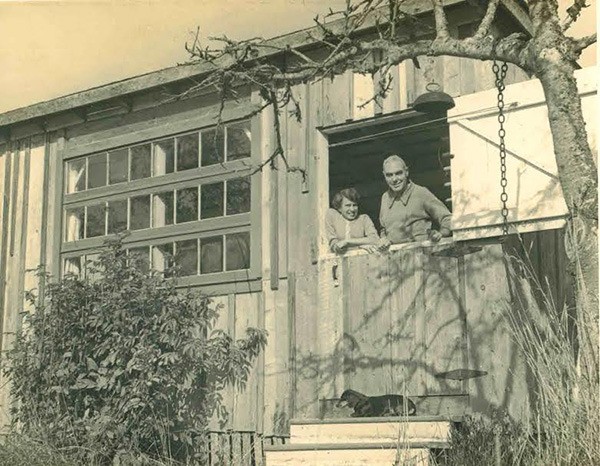
Solymar, Lopez Art Studio in the fifties
Published 8:47 am Wednesday, September 3, 2014
By Nancy McCoy
For many of us who haven’t spent our entire lives on Lopez Island, it is difficult to imagine the island without its vibrant, artistic community.
Seattle artist Phil Fagerholm grew up on Lopez in the 1950s when farming and fishing seemed to be the only two career options available to him. Phil began taking art lessons at Solymar [Sun & Sea], an art studio established in 1950 by Bruce and Jane Johnston. The studio building still stands today just north of Islands Marine Center on Fisherman Bay. Phil realized that he wanted to become an artist and as soon as he was able, he said he left Lopez and “never looked back”.
The Johnstons, both recognized Seattle artists, set up Solymar as a weaving and design studio, offering one week workshops which included accommodations. Course instructions were offered in color; design; weaving; dyeing; drawing and composition. Their workshop brochure stated that their instruction “aims at widening the visual experience of the individual and at directing his work toward sound contemporary result”. Course tuition for the week was $25.00 plus a small supplies fee.
Bruce Johnston, born in Pennsylvania in 1905, was a craftsman and painter. He was known in the Northwest as a designer and a weaver of fabric for clothing. In 1949 he had an exhibition at the Seattle Art Museum. The Otto Seligman Gallery in Seattle featured his weaving in May 1956.
Jane Givan Johnston, born in Seattle in 1909, was featured in an article titled “Icons for the Home” in a Seattle Times Sunday Pacific Northwest Living magazine in the late 1950s. Her chosen subjects, saints and Madonnas are strikingly similar to works created today by Lopez artist Tamara Shane. The Johnstons gathered driftwood, stones, shells and moss for the icons.
Jane was a designer (costume; textile; fashion illustrator), painter (Japanese brush painting, decorative painting in tempera), decorator and flower arranger. She studied at Cornish Art School in Seattle and later taught at the school.
Living as artists on Lopez, Bruce and Jane Johnston were a little ahead of their time and were not well received by the small island farming and fishing community. They remained at Solymar on Lopez until at least 1958 and then moved to Port Townsend.
While working at the Lopez Island Historical Museum for twenty four years, I never came across any information about the two artists. After I left the museum, fellow historians and founders of Orcas Island’s Crow Valley Pottery, Richard Schneider and Bud McBride began sending me bits of information about the Johnstons, as they began downsizing and preparing to move back to Orcas Island full time. They would send me a photograph, a workshop brochure, a small weaving, a gallery flyer, whenever they came across them. They even gave me a delightful piece of art, three nude figures dancing on a piece of driftwood board. I continue to look for additional information about the Johnstons to flesh out their Lopez story. I sometimes wonder if any of their art still remains on the island today.
Nancy McCoy continues to work as an independent historian. As Museum Director/Curator at the Lopez Island Historical Museum, she chaired their fundraising auction for twenty two years and was involved in restoring the historic Port Stanley School, listing it on the National Register of Historic Places.