Ferry hopes adrift
Published 1:30 am Friday, May 22, 2026
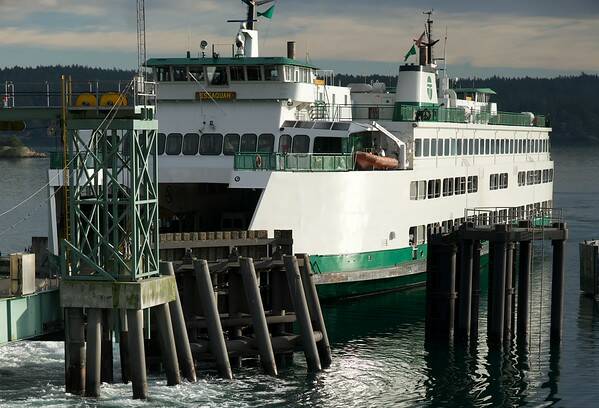
The waters around San Juan County’s ferry future grew considerably choppier over the last few months, as three ferry-related developments converged to paint a sobering picture for island residents: the Mosquito Fleet Bill is dead, a major new federal ferry funding bill offers little near-term relief for San Juan County and skepticism is growing that the long-promised return of the Anacortes–Friday Harbor–Sidney route by 2030 is possible.
San Juan County Council member Jane Fuller confirmed that the Mosquito Fleet Bill, which would have helped establish an alternative ferry service for the islands, did not survive the last legislative session.
“The Mosquito Fleet Bill has died in the last session,” Fuller said in a recent interview, “and we’re looking at things through a different lens now.”
House Bill 1923, the Mosquito Fleet Act, would empower counties, port districts, transit agencies and other local jurisdictions to establish passenger-only ferry service districts across Puget Sound and Grays Harbor. It passed the House with a strong bipartisan vote of 84-11, but ultimately died in the Legislature.
Fuller said the county is now pursuing a different approach, examining whether existing state law permits San Juan County to establish its own passenger-only ferry service. “We are in the process of looking into that because what we need to know is, is there anything prohibiting us as a jurisdiction, San Juan County, from creating our own passenger-only ferry service, given existing state legislation,” she said.
On May 13, U.S. Congresswoman Emily Randall held a press conference in Seattle alongside Gov. Bob Ferguson to highlight the bipartisan FERRIES Act — House Bill 7774 — which she co-introduced with Reps. Nick Begich (R-AK), John Garamendi (D-CA) and Nicole Malliotakis (R-NY). The bill would call for, in Randall’s words, “record-setting investments in ferries, expansion of grant opportunities and funding so that Washington State Ferries can benefit.”
The bill would boost the Federal Transit Administration’s Passenger Ferry Grant Program to up to $550 million annually, expand the Rural Ferry Grant Program to up to $550 million per year and establish a new Ferry Fleet Modernization and Shipyard Job Creation Grant Program, among other provisions.
For San Juan County, however, there is a significant catch — and it is not a small one. Fuller was direct: “San Juan County wouldn’t be eligible for any funding directly because we don’t have a ferry district and we don’t have a transportation benefit district.” She explained that “unless and until we have a governance mechanism like that, like some kind of entity that could receive federal ferry funding, we wouldn’t be able to even apply for these monies.” Separate from Fuller’s remarks, creating such a district would take time, require new governance structures and, critically, would require additional taxation.
Perhaps the most pointed discussion at both the April and May Ferry Advisory Committee meetings centered on whether the long-promised 2030 return of ferry service between Anacortes, Friday Harbor and Sidney, British Columbia, is realistic. The blunt answer, from multiple voices at the table: almost certainly not.
At the April 8 meeting, Duncan Chalmers, a member of the citizen advocacy group Restore Our Ferries, put it plainly: “For years now, the Washington State Ferries has set the expectations with the public that they’re aspiring to return the Sidney Ferry in 2030. When one looks at this fleet projection, and I haven’t heard anybody disagree with it, it looks pretty solid; that doesn’t look possible.”
FAC member and retired Washington State Ferries Captain Ken Burtness agreed, noting that the Legislature’s failure to fund new boats compounds the problem year after year.
“Every year that goes by, that 2030 number seems less and less likely,” he said at the May 13 meeting.
Washington State Ferries’ own contingency plan, presented to the FAC by Planning Manager Jason Rogers, reinforced the point in unambiguous terms: “You can see, of course, down at the bottom, there’s no service to Sidney. We don’t have a vessel to do that.”
At the April meeting, Council member Kari McVeigh captured the economic toll for the islands: “It is an economic disaster. When the Sidney ferry was stopped, it was an economic disaster for Anacortes, I know, and it was an economic disaster for Sidney.”
That assessment is grounded in direct experience. McVeigh attended a cross-border economic summit in November, where the suspension of the Washington State Ferry service to Sidney, British Columbia, emerged as a central concern among both U.S. and Canadian participants.
McVeigh, who facilitated the economic breakout session at the gathering, said in an interview with the Journal in November that the impact of the closure far exceeds the state’s projected savings.
“In the budget line for the state, when they put their budget together, they said it was a $3 million savings,” McVeigh said. “And I know for a fact that it is over a $3 million loss of economic revenue for Canada and the United States, probably three times that.” She noted that the ferry’s absence is not only an economic blow but also damages the long-standing spirit of cross-border cooperation. Sidney Mayor Cliff McNeil-Smith, who attended the summit, echoed those same concerns, according to McVeigh.