By Chom Greacen
Special to the Weekly
“I’m allergic to zucchini!”
Such a proclamation by school children is among their more creative defenses against recognizable garden vegetables. Instead of a daily dose of sugary industrial cereal for breakfast, Lopez students are now confronted with hot steaming chocolate muffins with (mostly) clandestine zucchini from the school’s “lunch ladies.” At lunch, yellow squash might disguise itself among the company of mac & cheese. The alfredo sauce on pasta may be harboring cauliflower. Yummy fries may not be what they appear as they could be made of zucchinis instead of potatoes.
So what’s the mission of the lunch ladies’ covert operation? To inject the most and best nutrients available into the food that goes into the students’ mouths.
Lucky students on Lopez Island have long been spared from the horror of slimy prepackaged glop and tired industrial goop typical of the lunch experience at some U.S. public schools. But this year, the Lopez School’s award-winning farm-to-school program, in collaboration with the kitchen staff, has raised the bar by several notches.
All salad dressings are now homemade, or rather, school-made, to avoid a long list of questionable additives. Many spice jars are now filled with herbs from the garden. Bread is baked fresh in the kitchen. Applesauce from Lopez orchards is used to cut down oil and sugar content in muffins. Fresh salsa, pesto and tomato sauce are all made from fresh beautiful harvests from the school’s prolific garden. Fruits served during meals are pesticide-free and locally harvested or donated by generous community members.
All in all, 90 per cent of the vegetables served at Lopez School currently come from the island, with an overwhelming majority coming from the school’s own garden.
Students also get to enjoy organic milk this year. With a little digging, the lunch ladies found bulk organic milk costs the same as non-organic milk in cartons. They negotiated deals to bring high-quality, local beef and pork to the table. They even went as far as wild-crafting rosehips and oat straw for tea and making their own bone broth for chicken soup lunch.
“Rosehips are very high in vitamin C. Bone broth is more nutritious and has restorative properties. We hope to help strengthen students’ immunity against illnesses through the food that we serve,” the Head Cook, Shannon O’Donnell, explained in a calm, nonchalant voice, totally belying how extraordinary her kitchen practice is, even for a high-end restaurant, let alone a public school cafeteria.
Given the school’s constrained budget, how does O’Donnell and her team of one cook assistant, two part-time school gardeners and one part-time server/dish washer manage to whip up gastronomical feasts from scratch, feeding up to 200 people day after day?
It comes down to two things: dedication and community support.
The extra effort required to grow, harvest, process and cook vegetables into fresh, yummy tasting dishes that appeal to picky eaters is nothing short of monumental.
Yet when asked about the extra work, O’Donnell reflected, “I don’t feel like it is extra work. I guess it is, to some degree. But it is worth it. “
Similarly, school gardeners Valerie Yukluk and Suzanne Berry can sometimes be found working in the garden and kitchen until dusk harvesting and processing garden crops, and putting up food for future use in less abundant times.
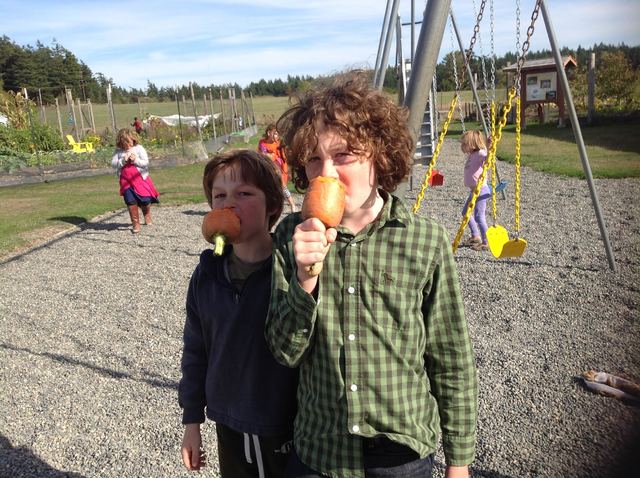
Berry has made it her personal mission this year to provide healthy snacks to elementary students by cutting up fresh cucumbers, peppers and carrots from the garden and delivering them to classrooms.
A non-veggie-lover fourth grader told his parent Ellyn Goodrich, “Mom, we’ve got to buy fresh garden cucumbers and peppers. I had them for snacks and they were so good!” The remark delighted Ellyn and prompted her to rush to a local farm stand to satisfy this wonderful request, a first from her son.
The math teacher Alex Nelli and her fourth grade class are also orchestrating an awareness building “food waste challenge” to see which class wastes less food. So far, the switch from non-organic milk in cartons to organic milk served in glasses, for example, has led to a two-thirds reduction in milk waste.
School food production weaves its way not only into the cafeteria and students’ bodies but also into classrooms and students’ minds. In addition to garden classes where students participate directly in the production process, over 100 pounds of harvested dry beans this year has become a big hit among younger students and a subject of scientific investigation for older ones.
Besides dedication of those involved, the Lopez Island Farm Education and school lunch program owes its success to community support: from donation of soil amendments, local fruits, countless volunteer hours spent in the garden or kitchen, to crucial monetary support to compensate the two part-time gardeners for their tremendous work.
“My hope is for people to relate to food differently. It takes a lot to produce good, wholesome food. If people value their food more, I believe how we treat other people and things around us will be different, too,” said O’Donnell.