By Darrell Kirk
Staff reporter
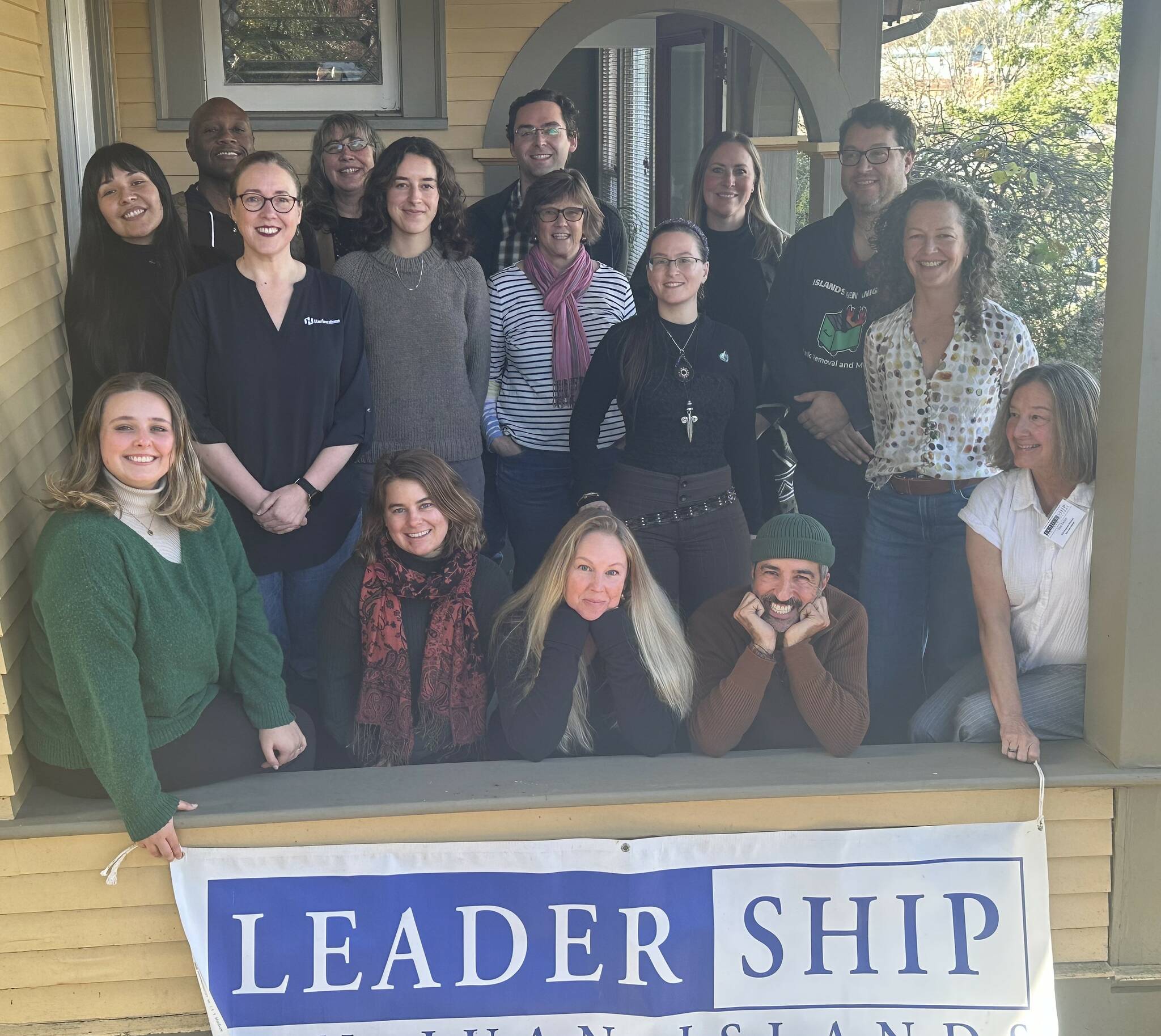
After two decades of cultivating community leaders across San Juan County, Leadership San Juan Islands is celebrating the launch of its 17th cohort — a diverse group of 15 individuals representing all four major islands who are embarking on a six-month journey of learning, networking and community engagement.
Founded in 2004 by Ron Zee, founder of the Madrona Institute and one of the cofounders of LSJI, along with Colleen Clancy, former director of Skagit College, and fiscal founder/sponsors including Skagit College, the Economic Development Council and San Juan County United Way, the program has grown from a visionary idea into a cornerstone of community development in the islands. Other early founders included Jim Skoog, Cathy Cavanaugh (deceased), Lynne Hobbs, Liz Illg and Ralph Hahn from the Economic Development Council. The program became a 501(c)(3) in 2008.
Over the past 20 years, approximately 240 alumni have completed the program, many going on to leadership roles in local government, nonprofits and business.
“The more we build strong leaders in our county, the better our county will be,” said Kari McVeigh, a San Juan County Council member, program alumna and former leadership consultant. “Leadership San Juan allows our county to grow our own leadership, strengthen it, and create networks for people so they have a support network as they contemplate becoming a leader.”
The program distinguishes itself by focusing on servant leadership and facilitative leadership rather than traditional civic and elected office paths, according to Gretchen Krampf, the program’s president, who was also a member of the very first cohort.
“A lot of it is really focused on servant leadership and community leadership, facilitative leadership, as opposed to civic and elected office,” Krampf explained.
What sets LSJI apart is its comprehensive approach to understanding the county as an interconnected system. Through “challenge days,” participants explore economics, governance, arts, history, and culture. The current cohort recently attended Economics Day, hearing from the Economic Development Council’s Victoria Compton, the County auditor, and the budget analyst to understand how county finances work and where resources flow.
The program also maintains deep connections to the region’s indigenous heritage. Samish elder Rosie Cayou James, who recently passed away, was a longtime supporter and teacher who provided profound experiences for cohorts, including leading a leadership blessing ceremony at Watmough Bay, a national monument and Coast Salish ceremonial space.
The 17th cohort represents a cross-section of island life and professional experience. Members include Magali Cota, staff attorney and legal director at Friends of the San Juans; Elaina Thompson, executive director of the Islands’ Oil Spill Association (IOSA); Tillery Williams, Deputy County Manager; and Gabrielle Conway, projects and grants coordinator for San Juan County Parks and Fair.
The group spans ages from the 20s to the 70s and includes professionals in fields ranging from environmental law to library services, from junk removal to wildlife rehabilitation. Some, like Pedro Mendes from Lopez Island, bring international perspectives — he moved from Lisbon, Portugal, and now manages food programs at the Lopez Island Family Resource Center.
The program’s impact extends far beyond individual development. Three LSJI alumni — Chom Greason, Faith van de Putte and Nikyta Palmisani — spearheaded the climate community conversations that have occurred over the past year, informing how San Juan County addresses climate change.
Other notable alumni include Judge Katie Loring, Friday Harbor Town Council members Steve Hushebeck and Anna Maria de Freitas, and Lerner Limbaugh, founder of the Orcas Food Co-op.
Unlike urban leadership programs that can charge $1,800 to $2,500 for tuition, LSJI has maintained a modest fee of $795 for the entire program, relying on support from community foundations on Orcas and San Juan, as well as alumni contributions. All faculty serve pro bono.
The program runs from November through the end of April, timed to accommodate the agricultural and tourism sectors. “Especially in the ag sector here with tourism, it’s really hard to start anything before we get through the film festival,” Krampf explained. “We have to finish before the farming season and tourist season begins.”
Participants engage in day-long Friday challenge days and work in learning circles on community service projects. The cohort will graduate at the end of April at the Grange in Friday Harbor.
For Council member McVeigh, the program’s value lies in the networks it creates and the relationships it fosters. “Being a good leader is very relationship-bound,” she said. “It’s knowing the content of what you’re trying to lead. It’s understanding how people think. It’s how people work together.”
The program will begin recruiting in spring 2026 for Cohort 18, which will start in fall 2026. The minimum age for participants is 21. Those interested in learning more can visit the Leadership San Juan Islands website at https://lsji.org/.