County council to submit state, federal legislative priorities
Published 1:11 pm Thursday, September 13, 2012
The San Juan County Council has drafted state and federal legislative priorities bound for Olympia and Washington DC. Councilwoman Lovel Pratt is spearheading the priorities effort.
The priorities have undergone several drafts in response to council discussions and public testimony at council hearings. Final council action on the recommendations will probably occur in October.
Federal
The council’s first federal legislative priority for 2013 is directed at oil spill prevention and response, partly in reaction to present and future increases in shipments from British Columbia ports of “bitumen” derived from the oil sands of Alberta. Shipments are expected to grow every year for many years, and the heavy, tarry bitumen is especially problematic in the Salish Sea because it sinks – a potential disaster should a spill occur.
The issue of bitumen transportation through local waters dovetails with future coal shipments from the proposed Gateway Pacific Terminal near Bellingham, but the significant attention these issues will receive from the federal Environmental Impact Statement process suggest that little congressional action can be expected.
Other proposed federal priority issues: funding for the Cattle Point Road realignment project in the San Juan Island National Historical Park; designation of San Juan County BLM lands as a National Monument (by presidential proclamation) or as a National Conservation Area (by congressional action); funding for Orca protection enforcement; updating flood insurance rate maps in the county; and funding for the Deer Harbor bridge project.
Because of Sen. Patty Murray’s chairmanship of the Transportation Subcommittee of the Senate Appropriations Committee, the Cattle Point Road project and the Deer Harbor bridge project are the likely to be successful.
Washington state
Because the county is represented in Olympia by a state senator and two state representatives, the 2013 state legislative priorities will receive substantial attention from the Legislature, according to Pratt.
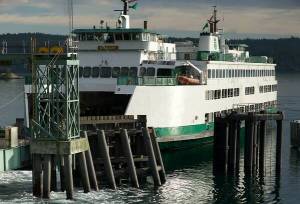
The first Olympia priority is securing “adequate, dedicated and sustainable” funding for the ferry system, both for operations and for building new ferries. Vehicle licensing fees are seen as a potential sustainable sources of funding for both operating and capital budget expenditures. Councilman Howie Rosenfeld points out that “the legislature covered 2013 ferry operating expenditures, but funding for future years continues to be a problem.”
Other ferry action items are construction of a second ferry slip in Friday Harbor and funding for construction of a commuter parking lot in Orcas Village.
The second state priority, like the first federal priority, is oil spill prevention and response. Specifically, the county wants to enlist the Governor, the Department of Ecology, the tribes and the legislative delegation to support designation of San Juan County as a staging area capable of meeting four-hour and six-hour oil spill response standards. Such a designation, of course, implies provision of funding to locate equipment and personnel in the San Juan islands to respond to spills.
This second priority has a specific action option related to the Gateway Pacific Coal Terminal near Bellingham. Specifically, the council is asking that state and federal authorities require that Environment Impact Statement scoping meetings be held in San Juan County, and that the resultant EIS address increased vessel traffic and risk of water contamination.
As always with both Congress and the state legislature, the fly in the priorities ointment is paying for expenditures necessary to implement the desired policies and programs. If the budget woes of recent years continue to prevail in 2013 and beyond – in San Juan County, Olympia and Washington, DC – the council priorities may receive short shrift from Congress and the legislature.